

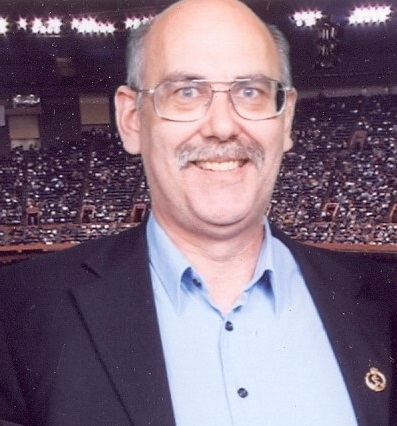
I’m proud to publish another intriguing and thoughtful article by returning guest author – and editor of the fantastic Sergeant Frosty Publications – David Flin. This time, David has focused on beloved children’s classic Winnie the Pooh by AA Milne – and in doing so, gets to the heart of why Milne’s book remains so popular and so engaging almost a century after it was first published.
A Review of Very Little Brain.
In Which Sergeant Frosty Reviews Winnie the Pooh, by AA Milne.
His name is Edward. Edward Bear, but he’s called Winnie the Pooh, and he lives under the name of Sanders.
“What does ‘living under the name of Sanders’ mean?”
It means that he had a sign in gold letters saying Sanders over his front door, and he lived under it.
And thus we are introduced to Winnie the Pooh. There are four books in the series: Winnie the Pooh, The House at Pooh Corner, When We Were Very Young, and Now We Are Six. The first two books are collections of short stories, the latter two of poems.
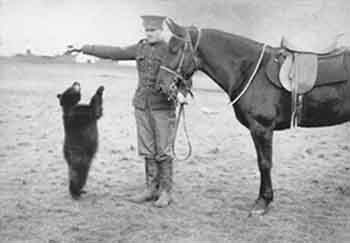
“But why Winnie the Pooh?” I hear you ask. It’s a good question. He was originally called Edward Bear, but the young Christopher Robin Milne visited London Zoo, and renamed Edward “Winnie”, after an American brown bear called Winnipeg that had been brought over by Lieutenant Harry Colebourn of the Canadian Army Veterinary Corps as part of the Canadian Expeditionary Force in 1915. When the troops were deployed to France, Harry Colebourn donated the bear to London Zoo for safekeeping.
As for Pooh, that was the name Christopher Robin gave a swan he used to feed in the mornings, and the two were combined to make Winnie the Pooh.
The book Winnie the Pooh entered the public domain in Canada in 2007, in the US in 2022, and the UK copyright will expire in 2026. Although it should be noted that the illustrator EH Shephard lived until 1976, so copyright of the illustrations will remain until 2047.
I should note at this point that I am only going to discuss the book Winnie the Pooh, and I shall be ignoring the execrable films. If nothing else, Pooh’s voice is clearly described in the books as “gruff”, “deep”, and “a growl”. Kind of like how you would expect a bear to talk. The films depict Christopher Robin as being around ten years old, which is about twice his age in the books.
But perhaps worst of all, the Disney films make both heffalumps and woozles real, when the whole point of them in the book is that they are imaginary creatures resulting from fear.
Bah, humbug. That’s the last I’m going to say about the films. Hopefully, if I ignore them, they will cease to exist.
AA Milne had served as a Signal Officer on the Western Front during WWI, including during the Somme in 1916. The books he wrote are a clear reaction to his experiences.
Winnie the Pooh is set in an idyllic Arcadia, the Hundred Acre Wood, which is populated with a variety of his friends. The big feature of the books is that everyone is (for the vast majority of cases) kind and nice to each other. There simply isn’t a big villain figure, no major antagonist.
Adventures arise from exploring (such as the Expedition for the North Pole) or by accident (Pooh getting stuck in Rabbit’s front door) or by bad weather (Piglet getting flooded out) or by misunderstandings (Eeyore losing his tail).
If I’m honest, that’s probably a fairly faithful depiction of the vast bulk of humanity. In my experience, most people are nice and try to be kind, and unpleasantness generally comes against those perceived as outsiders. Remarkably, this is the case in the stories, where both Kanga (in Winnie the Pooh) and Tigger (in the House At Pooh Corner) are newcomers to the Hundred Acre Wood and both initially meet with non-acceptance until they become friends with the other animals.
Despite this, the world is, quite simply, a middle-class rural idyll. It’s the sort of place any young child would love to live. Those who know about my background will know that at that age, I was in no size, shape or form either middle-class or living in a rural environment. It didn’t matter. I may have lived among the rubble of the East End of London, with many buildings still wrecked as a result of the Luftwaffe’s attempt at preparing for urban renewal some ten years earlier, and if there were two trees standing in close proximity, I was unaware of the fact.
Nonetheless, it was possible to have Adventures (like searching for the North Pole or, one I remember getting involved in, finding burrows between different places and seeing how far we could get using these “rabbit” burrows.
There’s another factor that makes these books appealing to a child. Christopher Robin (and, by extension, the reader) is afforded agency and – above all – respect. For a 5-year-old child, that’s an intoxicating prospect. They can see their own life, where adults make all the decisions and are the final arbiters and who are the ones who make the world safe (or not, in a few cases) for the child. The idea that they have this power (and will do when they are older, say maybe the Tuesday after next) is incredibly empowering. Anyone who has had dealings with children knows that the way to get their respect is – amazingly enough – to treat them with respect. It’s always astonishing to me how many adults expect children to respect them without showing the slightest sign of respect for the children. People: Children copy behaviour that they have learned, and the word to describe someone who expects others to respect them without showing any respect themselves is: “Bully”.
The stories were written with the target audience clearly in mind, and they display that degree of child-like logic that can be hard to correct where it is wrong. For example, Christopher Robin talks about the North Pole and the South Pole, and is asked if there’s also an East Pole and a West Pole.
The rebellious element of many children’s stories is absent from these books. To adapt a quote from another source – the characters in Winnie the Pooh aren’t just classmates or people who happen to live nearby, they are beloved friends. Of course they are. That’s what children’s toys are for – to be loved unreservedly.
There’s no deep meaning to the stories, no allegory or moralistic lessons such as one might have got in books from the pre-War period, when children’s books were intended to be educational first and entertaining a very distant second.
In addition, the stories are brilliantly constructed. When Eeyore loses his tail, the mystery of where and how it has gone is sustained for just the right length of time, and the denouement is satisfying.
Naturally, the Literary World didn’t like such books, presented without artifice and in such a way that anyone can discern the meaning of the text without recourse to such luminaries as themselves. It was largely ignored by the Literary World (although not by parents and children).
John Rowe Townsend, the literary critic described Winnie the Pooh and The House At Pooh Corner as a “spectacular commercial success of the 1920s, with light readable prose”. He also described it, dismissively, as being “as totally without hidden significance as anything written.”
It reached the point that in 1963, Frederick Crews wrote The Pooh Perplex, satirising literary criticisms. The book consisted of 12 essays examining Winnie the Pooh from the point of view of Marxist, Freudian, and New Age (among others) analysis.

The skewering Crews gave to literary criticism was so thorough that for 20 years or so, the books were largely left alone by critics. Robert Adams, writing in the Virginia Quarterly Review in 1964 indicated how literary critics disliked Crews’ work. Adams said that while Crews may have had some valid points, literary criticism had to be free from being satirised or else it would be “clubbed to death”.
As if one could accuse Winnie the Pooh of anything relating to a clubbing. Of course, China has banned images and mentions of Winnie the Pooh on social media, because of political opposition to Xi Jinping making use of memes of the bear.
I digress. This is a review of Winnie the Pooh, not an analysis of the social impact the book has had, although the social impact it has had has been immense.
The short stories in the two books are classic short stories, just the right length for a bedtime story. Each story is beautifully constructed, with cause and effect being shown. When Pooh goes into Rabbit’s house and eats all the honey and marmalade, he finds that he’s become too stout to get out through the front hole and he gets stuck. And in order to escape, he has to go on a diet for a week.
The other stories – where they all go in search of the North Pole, or when Eeyore loses his tail, or Eeyore’s birthday – all have perfect timing for a bedtime story.
That’s what the stories are. An idyll for children, a place where they can be happy and innocent and safe.
It’s inevitable that we have to leave the Forest, because that is a part of growing up. Christopher Robin has to go to school and leave the Forest behind (although he sometimes takes Piglet with him, because Piglet is small enough to fit unnoticed in Christopher Robin’s bag, and sometimes he – Piglet, not Christopher Robin – sits on the desk by the ink pot).
Milne says: “The Forest will always be there… and anybody who is Friendly with Bears can find it.” Pooh’s Utopia isn’t compatible with the adult world because the innocence and the certainty that everything will turn out well and the reassuring presence of a beloved Christopher Robin isn’t possible in the corrupted adult world.
But while this childhood ideal – and it’s idealistic, even for the most lucky of children – isn’t achievable, the world would certainly be a better place if people reminded themselves from time to time of these ideals, of kindness and gentleness and Bravery on Adventures.
The Snow Marine Speaks – David Flin
I’m David Flin, and I have been for most of my life. I’ve read that with great age comes great wisdom. Well, I’ve achieved the great age (71, and I’ve sidestepped three certain death situations). Wisdom, not so much.
I’ve been a writer for nigh on thirty years now, and in 2020, I concentrated on writing for children and young adults. I also started Sergeant Frosty Publications which publishes books for children and young adults.

 The Sci-Fi and Fantasy Reviewer